Most Leadfeeder (formerly Dealfront) alternatives look similar on the surface. In reality, they determine how successfully you execute revenue strategy across Europe.
European markets are structurally more complex than the US. Data is fragmented, regulatory environments vary by country and data quality decays quickly without local validation. As a result, the choice of data provider directly affects how confidently you can plan, target and forecast.
Many platforms in this category appear similar at a feature level. In practice, they are built on very different data models, coverage assumptions and compliance standards. Those differences determine whether your CRM becomes a reliable system of record-or a source of friction-and whether your AI and GTM workflows produce signal or noise.
This guide compares alternatives to Leadfeeder through that lens. Not just features or pricing, but how each approach supports accurate, compliant and scalable revenue execution across Europe.
Let’s start.
1. Cognism
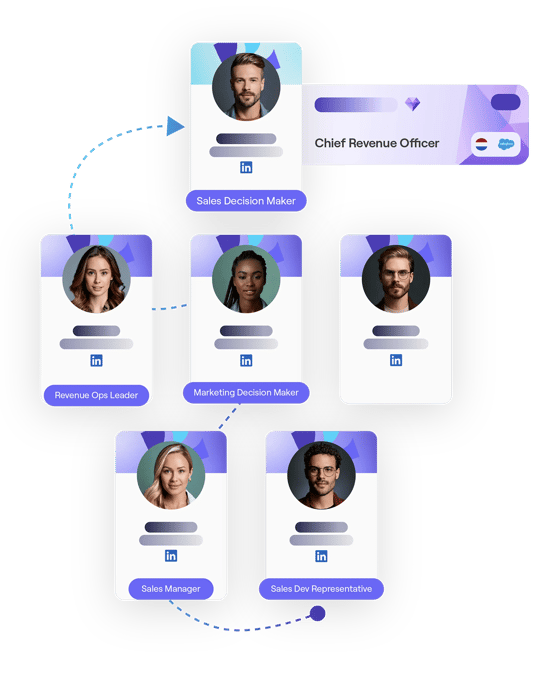
If you’re looking for an alternative to Leadfeeder’s B2B data in Germany, Austria, and Switzerland, Cognism is the solution for you. It provides the data foundation required to execute revenue strategies across these markets with confidence.
At its core, Cognism delivers decision-grade European data. Accuracy is not a surface-level metric; it determines whether teams target the right accounts, whether pipelines reflect reality and whether forecasts can be trusted. In fragmented European markets, this level of precision is essential.
Compliance is equally central. European data regulation is not uniform, and the commercial risk of getting it wrong is material. Cognism’s approach ensures that data can be used at scale without exposing the business to unnecessary regulatory or reputational risk.
Coverage is built for operational depth, which matters when executing across multiple European markets, where incomplete or inconsistent data leads to gaps in territory planning and missed segments within your total addressable market.
Data freshness underpins ongoing execution. European company and contact data changes frequently, and without continuous validation, CRM systems degrade quickly. Cognism ensures that data remains current, supporting consistent targeting, cleaner pipelines and more reliable AI-driven workflows.
In practice, this means revenue teams can operate with a single, trusted data layer across Europe, improving alignment between sales, marketing and operations, and enabling more predictable growth.
Top features:
- Decision-grade European data foundation
- Verified contact data at scale
- Native integration into revenue workflows
- Continuous data enrichment and CRM integrity
- Intent intelligence for prioritisation
- AI-powered data access
- Coverage built for international execution: EMEA, NAM, APAC
- GDPR and CCPA-compliance + DNC lists in 15 countries
- Operational support for enterprise teams
Cognism vs Leadfeeder: Quick comparison
The difference between Cognism and Leadfeeder goes beyond product capabilities. It reflects two fundamentally different approaches to data quality, commercial risk and revenue execution in Europe.
1. Data quality and coverage determine execution confidence
Cognism is built to provide decision-grade European data that is accurate, current and continuously validated. This enables revenue teams to plan markets, prioritise accounts, and execute consistently across countries.
Access to global data is included with the platform, with flexible usage designed to support ongoing execution rather than restrict it.
Leadfeeder offers strong regional coverage, particularly in DACH. However, differences in data depth and validation models can impact how consistently teams can execute beyond core markets.
2. Data access models shape behaviour and outcomes
Cognism’s commercial model is designed to support predictable, scalable use of trusted data across the revenue organisation.
Structured packages provide consistent access to high-quality, compliant European data, enabling teams to operate within a single, reliable data layer across sales, marketing and operations. This reduces CRM fragmentation and supports more consistent execution across markets.
Usage is structured to scale with organisational needs, allowing teams to maintain coverage and data integrity as they grow—without introducing barriers that limit adoption or create uneven data distribution.
By contrast, usage-based models such as Leadfeeder's can appear efficient at first but often introduce trade-offs over time. They encourage selective usage, restrict access across teams and can lead to inconsistent data coverage within the CRM.
3. Verified data improves connection quality
Cognism’s verified data provides phone-validated mobile numbers, enabling more direct and reliable engagement with decision-makers.
In European markets, where data accuracy varies significantly by country, this level of verification materially improves connection rates and reduces wasted effort.
Leadfeeder does not offer an equivalent level of mobile verification, relying more on email validation.
4. Compliance is a commercial requirement
Cognism embeds compliance into its data foundation. This includes GDPR and CCPA alignment, SOC 2 accreditation and systematic screening against Do Not Call lists across multiple countries.
This ensures data can be used confidently at scale, without introducing regulatory or reputational risk.
Leadfeeder is GDPR-compliant and offers DNC screening, but the scope and consistency of coverage are less clearly defined.
Cognism customers say:

Head of Sales & Partnerships @UpCloud

Pricing:
Organisations can choose between Standard and Pro plans, each including five user seats and access to Cognism’s Sales Intelligence.
-
Standard provides access to Cognism’s core European contact and company dataset, including phone-verified mobile numbers and CRM enrichment via CSV. It is designed for teams that require reliable, compliant data to maintain accurate CRM records, support market coverage and execute consistently across regions. The plan includes an annual data allowance per user (10,000 credits), with the flexibility to scale as data requirements expand.
-
Pro extends this foundation with additional capabilities, including on-demand verification, premium mobile coverage, company hierarchies, API access and intent data. It includes 12,000 credits per user annually. This supports more advanced segmentation, prioritisation and timing, enabling revenue teams to operate with greater precision across complex European markets.
Additional options, including user seats and CRM enrichment, can be configured based on organisational scale and data requirements.
For more information, view the Cognism pricing page, or request a data sample to test
2. ZoomInfo
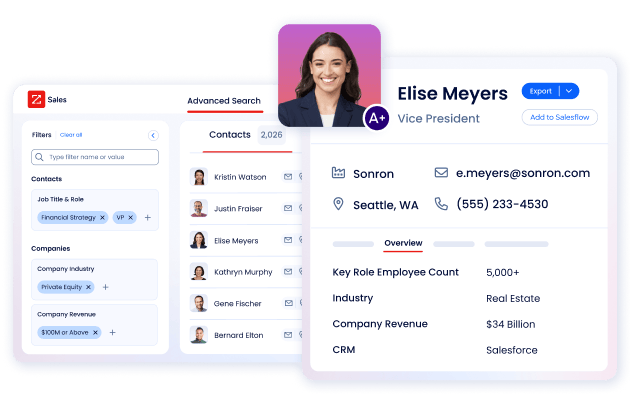
ZoomInfo is a Leadfeeder competitor that provides access to real-time account and contact data. Its suite of business intelligence tools includes detailed company profile insights, including revenue, technology usage, and the number of employees.
Top features:
- Sales automation.
- Web form optimisation.
- Digital advertising.
- Buyer intent.
- Website visitor tracking.
ZoomInfo vs Leadfeeder: Quick comparison
ZoomInfo provides a robust solution for enterprise sales teams looking for firmographic, technographic, and contact data. However, if you’re interested in global data, you’ll need to purchase a data passport.
Leadfeeder is similar to ZoomInfo in that certain features and credits for data viewing are available only in higher-priced packages. This includes access to Leadfeeder’s entire European dataset, which is only available on the most expensive plan.
Cognism, on the other hand, stands out by combining global data coverage with compliance-first principles, offering a more trusted alternative for EU-centric companies without sacrificing data quality.
See how Cognism compares to ZoomInfo
Pricing:
You can request ZoomInfo pricing from its website. ZoomInfo’s packages follow individual pricing tiers for sales, marketing, and recruitment. Seats, credits, and supplementary tools also affect cost.
3. Breeze Intelligence (formerly Clearbit)
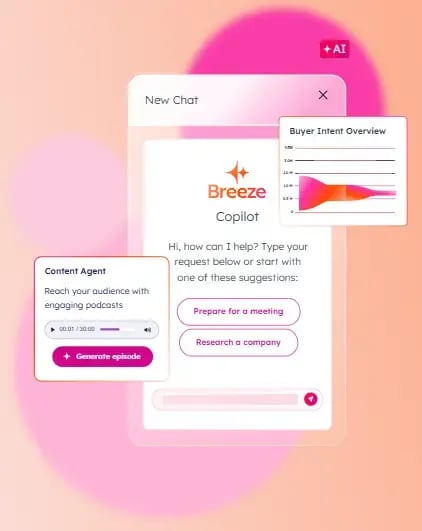
Breeze Intelligence (formerly Clearbit) is one of the Leadfeeder competitors in the marketing intelligence space. It’s best suited for marketing and operations teams looking to enhance existing data and automate workflows.
The new tool, developed by HubSpot, uses AI and your CRM data to research companies, prep for sales calls, build pipeline and summarise CRM records for streamlined marketing and sales efforts.
Top features:
- Form shortening
- Buying intent signals.
- Lead scoring.
- Tailored outreach.
Breeze vs Leadfeeder: Quick comparison
Breeze specialises in enriching existing CRM records with real-time data, making it particularly valuable for marketers and demand-generation teams.
While Leadfeeder focuses on generating leads through its sales intelligence suite, Breeze enhances the value of existing data.
Cognism beats both tools by offering a full-funnel solution that combines contact data enrichment with lead generation capabilities while maintaining high compliance standards.
See how Cognism compares to Clearbit
Pricing:
Breeze pricing is based on credit packs of 100, 1,000 and 10,000. Packs range from $30 to $700 a month.
4. Lusha
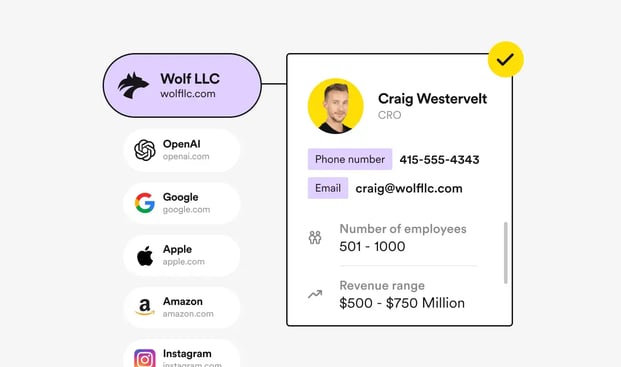
Lusha is a Leadfeeder alternative that helps teams find prospect contact information. Its analytics capabilities simplify identifying leads and measuring performance.
Top features:
- Allows prospecting with basic data types and filters.
- Email sequence automation.
- Intent signals for enterprise clients.
- CSV enrichment.
Lusha vs Leadfeeder: Quick comparison
Lusha is a straightforward solution for accessing contact information, especially for small or medium-sized businesses.
However, you may have to pay more for a package with your business’s required features. For example, there is no prospecting list export on Lusha’s free plan, and DNC screening and integration with certain CRMs require a higher-tier plan.
The Lusha website does not directly state where its data coverage lies, so coverage can’t be compared to Leadfeeder. However, Cognism stands out as a more advanced and scalable solution, offering richer datasets and better support for enterprise sales.
Just ask Jack from Lockton:

Pricing:
Packages include Free, Pro, Premium, and Scale. Lusha pricing is based on credits per user. The Lusha website provides precise pricing information.
5. Hunter.io
/Competitors%20and%20other%20tools/hunterio-competitor-listicle-alternative-webp.webp?width=550&height=342&name=hunterio-competitor-listicle-alternative-webp.webp)
Hunter.io is another Leadfeeder alternative. It’s an email and domain finder that lists publicly available email addresses and automates email campaigns. It does not offer direct dials or intent data.
Top features:
- Email searches and verifications.
- Domain search.
- CSV exports.
- Cold email scheduling and tracking.
Hunter vs Leadfeeder: Quick comparison
Hunter.io is ideal for smaller teams focused on cold outreach to find email addresses. While Leadfeeder offers a more comprehensive sales intelligence platform, Hunter.io excels in its specific niche.
Cognism, however, outperforms both tools by providing not just emails but complete contact and company data, including direct-dial numbers, making it a stronger B2B prospecting platform.
Pricing:
Choose from Free, Starter, Growth and Scale plans. Subscriptions include unlimited team members who share common quotas.
You’ll find up-to-date pricing information on Hunter.io’s website.
6. Apollo.io
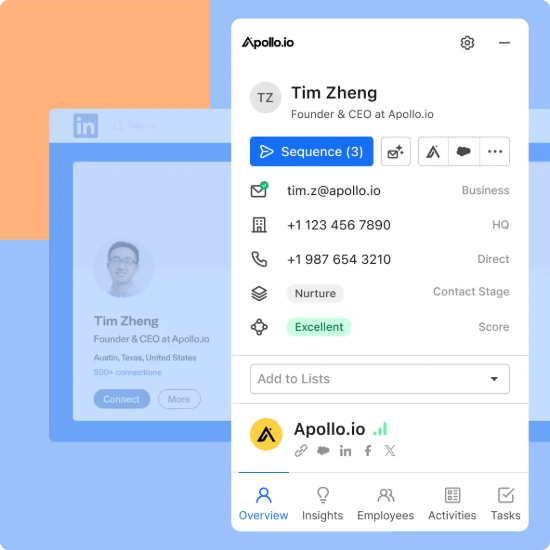
Apollo is a Leadfeeder alternative that helps teams uncover leads quickly. However, it may be unsuitable for dial-heavy users, as its dual-credit system charges users once per mobile and once per email.
Plus, according to Apollo’s T&Cs, the company can use customer-submitted data to supplement its database.
Furthermore, if compliance is key for you, be aware that Apollo.io had two data breaches in 2018 and 2021.
Top features:
- Sequence automation.
- Buying intent and intent filters.
- Data enrichment.
- Sales call transcriber, analyser, and insight extractor.
Apollo.io vs Leadfeeder: Quick comparison
While Leadfeeder and Apollo.io both emphasise lead generation, Apollo.io’s outreach automation gives it an edge for small businesses with tight budgets.
Cognism surpasses Apollo.io in enterprise-grade data quality, GDPR compliance, and enriched datasets, making it more suitable for scaling teams with global aspirations.

Director of Business Development @SUB1

Pricing:
Apollo.io charges per user per month, and you need credits to access data. You can choose between Free, Basic, Professional, and Organization packages.
You’ll find accurate Apollo.io pricing information on the website.
7. UpLead
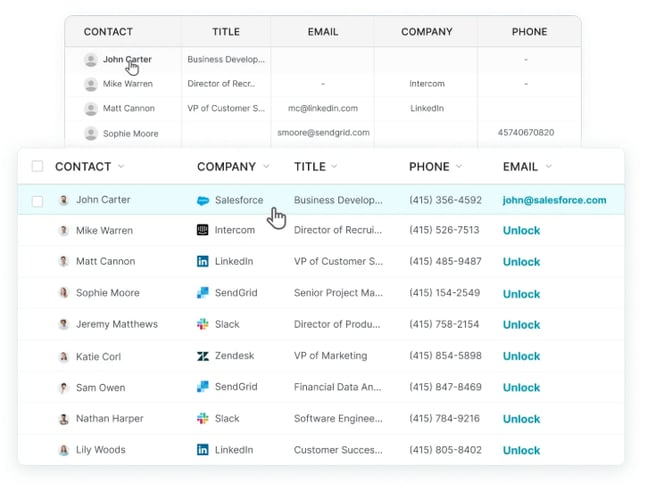
The next alternative to Leadfeeder is UpLead - a B2B prospecting platform where you can discover B2B contact data.
It collects data by analysing public domains and supplementing it with data from third-party vendors. Contacts are filtered by job title, location, company size, and industry. However, only one user can log in on lower pricing tiers.
Top features:
- Data enrichment.
- Technographics.
- Intent data.
- Chrome Extension.
UpLead vs Leadfeeder: Quick comparison
UpLead provides B2B data with a pay-as-you-go pricing model, making it a flexible option for smaller teams.
While Leadfeeder caters to localised European insights, UpLead’s model appeals to those needing flexibility. Cognism, however, delivers more value for teams that need robust compliance, enriched global datasets, and scalable options.
See how Cognism compares to UpLead
Pricing:
UpLead provides monthly single-user pricing tiers, including Essential and Plus, and a multi-user annual package called Professional.
Precise pricing information for UpLead can be requested directly from the website.
8. Lead411
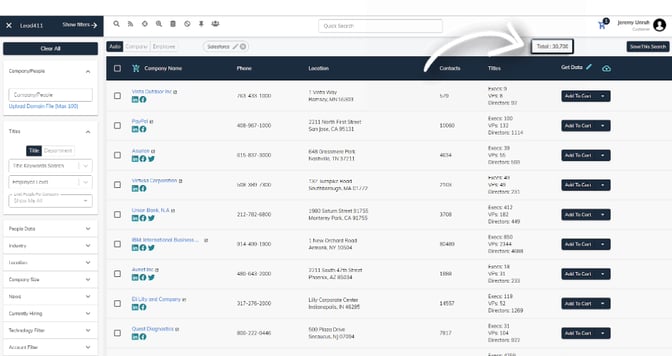
Lead411 is a B2B data platform that provides contact and account information for lead generation. It offers licences for single users and teams as well as company, employee, and buyer intent data as well as features for sales and marketing.
Top features:
- Buyer intent data.
- CRM Enhancer.
- Lead scoring.
- Multi-channel campaigns.
Lead411 vs Leadfeeder: Quick comparison
Like Leadfeeder, Lead411 may become expensive due to the need to buy credits on plans other than its custom Unlimited package.
What’s more, the tool focuses on trigger events like funding or hiring trends to help sales teams identify timely opportunities. While Leadfeeder emphasises market insights for Europe, Lead411’s strength lies in its event-based notifications.
Cognism beats both by offering a more comprehensive dataset and layering advanced filtering for precise targeting.
See how Cognism compares to Lead411
Pricing:
Lead411 offers monthly and annual plans. Depending on the duration, you can choose between Basic, Pro, and Unlimited. Up-to-date pricing is available on its website.
9. Lead Forensics
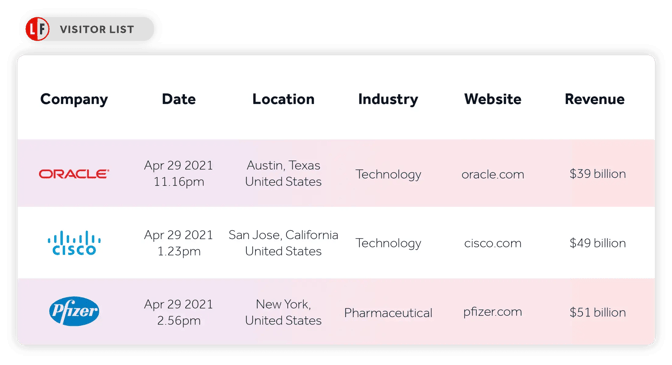
Lead Forensics is a fantastic sales tool for visitor identification. It’s not a data provider, but like Leadfeeder, this software gives insight into who visits your website and what interests them most.
It’s great for identifying new opportunities and understanding what potential customers want so you can personalise outreach.
Top features:
- Contact data.
- Trigger reports.
- Lead scoring.
- Lead manager.
Lead Forensics vs Leadfeeder: Quick comparison
Lead Forensics specialises in identifying anonymous website visitors and providing insights into their behaviour. Leadfeeder offers similar capabilities through its web-based tools, but adds a stronger European focus.
Pricing:
Lead Forensics has two plans: Essential for small and medium-sized businesses, and Automate for enterprise businesses. The latest pricing can be requested from its website.
10. LinkedIn Sales Navigator
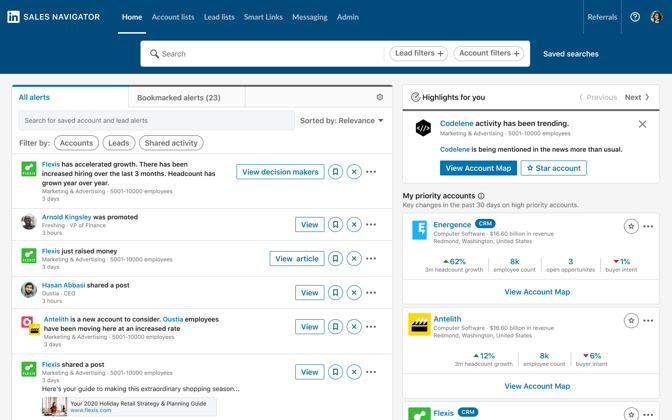
LinkedIn Sales Navigator is a Leadfeeder alternative that’s normally used alongside prospecting tools to reach out online. Although it does not offer contact data, the tool enhances LinkedIn outreach with advanced search and filtering options.
While some features can only be accessed on Advanced and Advanced Plus plans, users can narrow their search based on industry, location, company size, job title, etc.
Top features:
- Advanced lead search.
- InMail messaging.
- Real-time sales updates.
- Notes and tags synced with CRM.
LinkedIn Sales Navigator vs Leadfeeder: Quick comparison
LinkedIn Sales Navigator is unparalleled for relationship-based selling, allowing users to find and connect with leads within the LinkedIn ecosystem. Leadfeeder provides richer data insights outside of LinkedIn’s network, making it complementary rather than directly competitive.
Cognism beats both by integrating LinkedIn data into its platform while offering a quality European dataset and direct-dial contact information.

VP of Sales EMEA @Allego
Pricing:
You must contact the LinkedIn sales department or sign up for a free trial to get pricing.
11. Skrapp.io
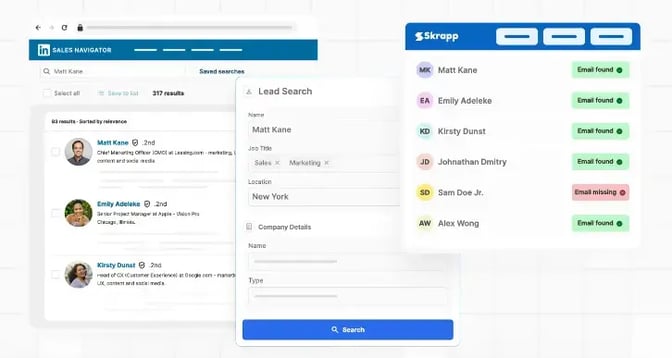
The last Leadfeeder alternative is Skrapp.io - an email finder for B2B sales and marketing teams. Its database comprises publicly scraped data and information collected from its users.
While the email finder is free, you’ll need to purchase a monthly package to take advantage of the free features on the other tools that make up this list.
Top features:
- Free email finder.
- Email verifier.
- Chrome extension.
- CSV export.
Skrapp.io vs Leadfeeder: Quick comparison
Skrapp.io is a lightweight tool for scraping and verifying emails, ideal for small teams with limited budgets. While Leadfeeder offers a broader sales intelligence platform, Skrapp.io focuses narrowly on email prospecting.
Cognism outshines both by delivering verified emails, direct dials, and GDPR-compliant data in one cohesive platform, making it better suited for scaling efforts.
Pricing:
You can use the free email finder tool or sign up for a monthly billed Starter, Seeker, or Enterprise plan.
Request accurate pricing directly from the seller.
FAQs: Choosing a Leadfeeder (Dealfront) alternative
Which Leadfeeder competitor is the best?
If you’re evaluating alternatives to Leadfeeder, the real question is how confidently you can execute a revenue strategy across Europe.
If you need:
-
More accurate, decision-grade data to support targeting and segmentation
-
Reliable access to verified contacts across fragmented European markets
-
Confidence that your data is compliant and fit for use at scale
-
A consistent data foundation to support CRM integrity and forecasting
Then Cognism is the strongest alternative.
It provides the trusted European data layer required to plan, prioritise and execute revenue growth with confidence.
Request a demo to assess coverage, accuracy and fit for your markets.
/CTAs%20(SEO)/data-eu-cta.webp?width=750&height=287&name=data-eu-cta.webp)